Higher Education’s Leadership Pipeline is Stronger Than the Headlines Suggest
By L. Jay Lemons, Ph.D. | September 2026
The past several years have seen publications emphasize the enormous challenges of the college and university presidency. Headlines such as “Why Would Anyone Want to Be a College President?” and “Why No One Wants to Be a College President, ‘You Could Not Pay Me Enough’” paint a bleak picture, suggesting that no one aspires to these leadership roles anymore.
Certainly, if you spend a day with any sitting college president, you will quickly see why this role is often called one of the most complex executive positions in the world. These leaders answer to a diverse array of stakeholders, balancing competing priorities while managing the lightning-fast flow of information driven by social media, artificial intelligence, and emerging technologies. They also contend with shifting demographics, financial constraints, and an increasingly skeptical public.
In spite of these realities, the imagined effect projected by these bleak headlines is just not accurate, and I am here to report that this perception is wrong.
At Academic Search, we see the opposite of what the press shares—strong, deep, and broad pools of talented leaders ready to step up. It’s a pattern we’ve watched for 50 years. In the past five years alone, we have conducted more than 100 presidential searches at institutions ranging from public regional universities and independent colleges to R1 universities and community colleges. Time and time again, we have seen dedicated individuals eager to take on the complexities of the role.
Thankfully, the reality is that qualified and enthusiastic candidates continue to step forward in presidential searches across the country. In many cases, we see applicant pools exceed 100 candidates, with a dozen or even several dozen applicants demonstrating the experience and preparation necessary to serve effectively in the presidential role. Just as encouraging, we see this same depth of talent throughout the leadership pipeline, from directors and deans to vice presidents and provosts. The future of higher education leadership is not built at the presidential level alone. It is being cultivated across our institutions every day.
Our responsibility as search professionals is to recruit broadly and widely, ensuring that search committees have a deep and talented pool to evaluate. Our aim is to create a scenario where the decision is genuinely difficult because of the strength of the candidates. As one system board chair put it after reviewing four finalists, “They were all outstanding. I want to hire them all.” That is the kind of challenge we strive to present to search committees, though we recognize that not every search unfolds in the same way.
There are also many sitting presidents who, in my conversations with them, whether in person, through our work at Academic Search, or on my Leaders on Leadership podcast, speak with deep gratitude about the opportunity to serve. Time and again, they share how fortunate they feel to lead their institutions despite the challenges because they believe so strongly in the transformational power of higher education. This sentiment is echoed in Inside Higher Ed’s 2025 Survey of College and University Presidents, where 89 percent of respondents agreed they enjoy being a president despite its challenges.
Hearing these leaders reflect on their journeys and seeing the results of Inside Higher Ed’s survey gives me confidence that the presidency remains not just a position of great responsibility but a calling that continues to inspire and attract exceptional individuals.
The news is even better, in my opinion, as the new crop of leaders is being more fully developed than at any point in our five decades of doing this work. Not only are there a growing number of programs aimed at building the talent pipeline, but we have also seen much more investment in helping sitting college presidents navigate today’s challenges.
For those preparing to take on presidential roles, institutions and organizations are recognizing that leadership in the academy is both an art and a skill, requiring intentional development. Programs such as the Council of Independent Colleges (CIC) Presidential Vocation and Institutional Mission seminar help candidates discern whether they are drawn to the work of the presidency rather than simply seeking the title. Interest in these programs is growing. My colleague, Dr. Steve Bahls, who serves as director for the program, recently shared that CIC received nearly twice the number of applications for its 2025-26 cohort compared to previous years, with particularly strong candidate pools. Many applicants are vice presidents who, after leading through challenging times, see the impact they can make as a president. Others are approaching the presidency with more caution and recognize the value of structured preparation before stepping into the role.
Similarly, the American Association of State College and Universities (AASCU) Emerging Leaders Program and Millennium Leadership Initiative cultivate new cohorts of leaders prepared to step up by focusing on preparing leaders to be effective and resilient with access to resources and networks to aid in their leadership. Through our parent organization, the American Academic Leadership Institute (AALI), we have the privilege of nurturing dozens of aspiring leaders annually through year-long academies for those in a variety of roles at their institutions.
At the same time, sitting presidents are seeing more resources dedicated to their ongoing success. I recently had a conversation with Dr. Chuck Welch, President of AASCU, where he emphasized the increasing value of executive coaching in higher education. He shared how leaders need to start looking at support like coaching from the perspective of strengthening themselves and their institutions versus feeling like asking for support comes from a place of not being good enough. As he put it, “Even a 20-year experienced president needs [coaching] assistance to maybe get outside of yourself or look at it from a different perspective.”
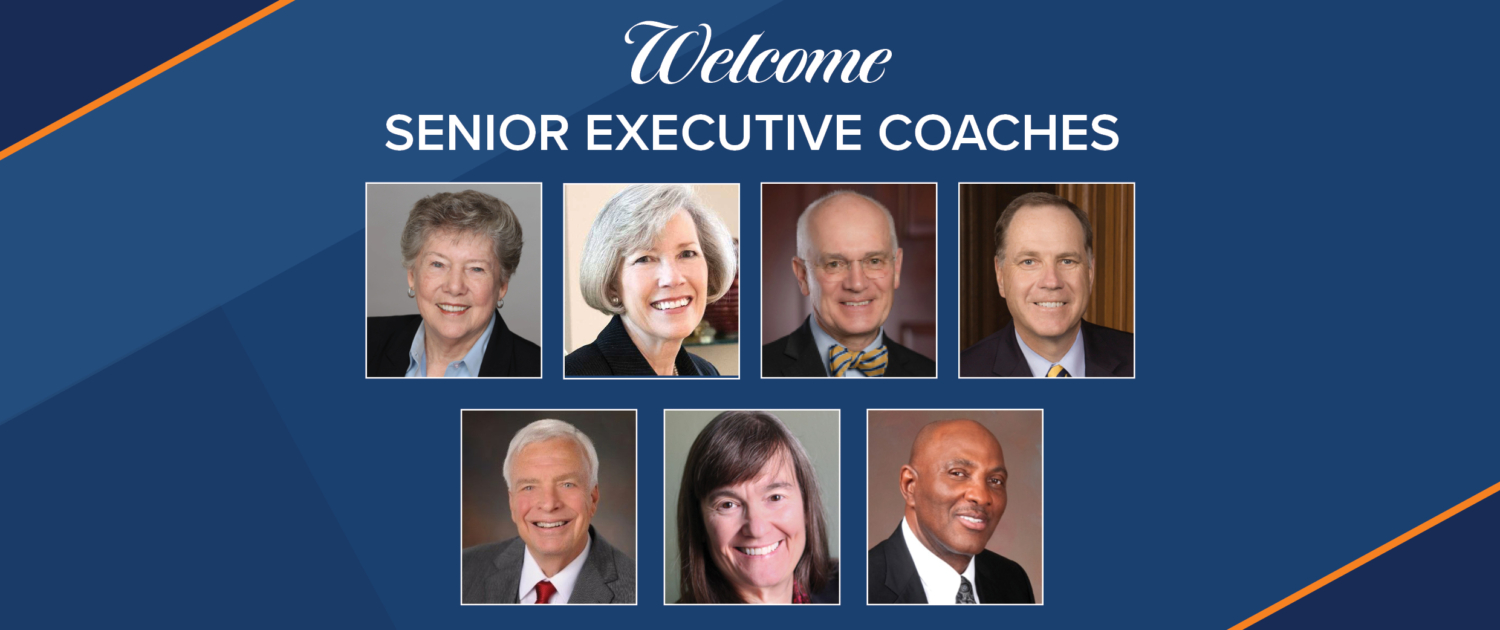
Our executive coaching practice at Academic Search has partnered with presidents and executive-level leaders at nearly 200 institutions across the country. These leaders have sought executive coaching for a range of solutions, including navigating transitions, strengthening their leadership approach in a changing and complex higher education landscape, strengthening cabinet and executive teams, and strategic advising on key issues. The goal of executive coaching is to provide a professional, trusted, strategic, and confidential human-centered partnership for reflection, strategic thinking, and professional growth as presidents, executives, and key leaders take on the challenges of the context in which they lead.
Recent findings from the ACE American College President Study reveal that while most presidents report having support networks, many struggle to find individuals who truly understand the unique demands of the role. The study underscores the need for professional organizations, associations, and experienced leaders to establish structured support systems for current and aspiring presidents.
Executive coaching plays a key role in addressing this gap by providing a dedicated space for leaders to process challenges, gain perspective, and receive guidance from those who have navigated similar experiences. By offering this kind of tailored support, we aim to combat the stigma around seeking help and ensure that today’s leaders have the resources they need to thrive.
At the same time, the pressures on higher education leaders continue to grow. Beyond financial and enrollment challenges, presidents must also navigate political and ideological pressures that complicate decision-making. Dr. Marjorie Hass, President of CIC, recently noted in an op-ed in Higher Ed Dive that college presidents are increasingly finding themselves in difficult positions when responding to state and federal scrutiny of higher education. Many are choosing strategic, behind-the-scenes resistance rather than public opposition, aiming to protect their institutions and students while still advocating for the values of higher education. Their ability to balance these tensions while staying true to their missions demonstrates the resilience and adaptability required in modern higher education leadership.
Amidst all of this, we are witnessing a significant breaking of the glass ceiling for women and persons of color. The old archetype of the white male president is not gone, but it is of note that 64% of the searches we have completed for various leadership roles in the past five years have found the right person identified as a woman or from an underrepresented population. We are making some slow progress in realizing the potential for leadership from the more than half the population under the sun that was historically excluded from these posts.
Look also to the Big Six higher education associations in Washington, DC, where leadership was once truly a men’s club. Today, two women and one person of color hold leadership roles at these associations. Notably, this July, Waded Cruzado, currently President of Montana State University, will become the first Latina to lead the Association of Public and Land-grant Universities (APLU). These leadership appointments signal a meaningful shift toward more representative leadership across the higher education sector.
However, representation alone is not enough. Support networks, mentorship programs, and structured professional development opportunities play a crucial role in not just opening doors but also ensuring all leaders thrive once they step into their roles. As higher education continues to evolve, it is vital that institutions foster environments that allow leaders from varying experiences to lead effectively rather than placing them in positions where they face disproportionate barriers and unrealistic expectations.
At the end of the day, has the complexity of the higher education presidency increased in the 21st century? Undoubtedly, the answer is yes. Has it diminished the number of talented leaders who are capable and willing to serve? Emphatically, no!
The headlines proclaiming a leadership crisis fail to capture the reality we see every day. Across the country, talented individuals remain deeply committed to higher education’s transformative power. They step forward with full knowledge of the challenges they will face because they understand that leadership matters.
So, the next time you read that no one wants to be a college president, take a step back. The evidence tells a different story. The future of higher education leadership is in good hands.
About the Author
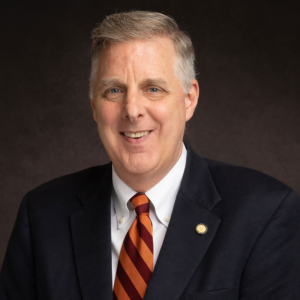
L. Jay Lemons, Ph.D.
President and Senior Consultant
Dr. L. Jay Lemons became President of Academic Search in 2017 after serving for 25 years as a college president in both public and private higher education. He was President of Susquehanna University from 2001 through June 30, 2017, and prior to that served as Chancellor of the University of Virginia’s College at Wise, UVA’s public liberal arts college in southwestern Virginia. A recognized leader in the academy, Dr. Lemons is devoted to supporting leadership and talent development.