Building Resilient Leadership: Lessons from Deloitte’s Higher Education Trends
By Rodney S. Clark | August 2024
A former colleague shared Deloitte’s 2024 Higher Education Trends report on the latest trends in higher education with me, and it resonated on various levels. The study reveals what many in higher education already suspect: the pressure on institutions’ leaders has never been more significant, and the industry will need to make substantial changes to prove its value in 2025 and beyond.
Substantial cultural changes in the last few years—underscored by the COVID-19 pandemic, protests in response to the Israel-Hamas conflict, and the Supreme Court’s reversal of affirmative action in admissions programs at colleges and universities—require strong and resilient executive leaders who can adapt to changes and put their institutions in positions of strength for the future.
Further, presidents must inspire their senior leadership teams to do likewise. The clear bottom line is that these are unusual and uncertain times. However, they present interesting opportunities for increased innovation and resourcefulness. The public’s trust in higher education has suffered a steep decline, and skepticism about the value of a degree has risen. College and university presidents are at an inflection point and must determine the best course forward to rectify this trend.
At Academic Search, I’ve had the privilege of working closely with exceptional leaders who are rising to meet these challenges head-on. Deloitte’s insights align closely with what they see daily: the need for agility and resilience in leadership. This shift isn’t just about reacting to crises; it’s about adapting to changes in demographics, technology, and what society expects from higher education.
The role of the president has never been more complex or crucial. Presidents must be visionary yet pragmatic, guiding their institutions through turbulent times while staying focused on long-term goals. Leadership is about fostering a culture of adaptability and continuous improvement within their teams, empowering them to develop innovative solutions to unprecedented challenges. It is more than just a task; it is a skill that can be developed and improved.
Based on Deloitte’s position that the pressures on higher education leaders have never been more significant, boards can play a crucial role in proactively planning for both expected and unexpected departures in leadership. In the report, Deloitte offers four pieces of advice for boards:
- Identify potential successors at the institution and develop them.
- Use external training and mentoring programs to offer development opportunities for executive leaders.
- Ensure that presidential search committees look for leaders from culturally and professionally diverse backgrounds
- Establish a support system for the selected candidate.
All four areas are crucial for identifying and developing leaders ready to take on these essential leadership roles.
Throughout their careers, many higher education leaders were “tapped on the shoulder” by a mentor at an institution to step up to a greater level of responsibility. I believe it is incumbent upon current and former higher education leaders to proactively identify and nurture potential leaders, rather than waiting for individuals to self-nominate. By developing leadership talent early, we can ensure our institutions are well-prepared for the future.
At Academic Search, our role as Senior Consultants goes beyond just a job; it embodies a passion and a commitment to ensuring our institutions not only survive but thrive in an ever-changing landscape. We invite you to join us in our dedication to building strong leadership throughout higher education.
About the Author
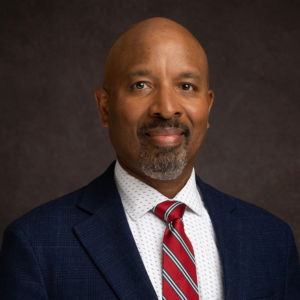
Rodney S. Clark
Senior Consultant
Rodney S. Clark has decades of higher education experience, having served in key roles such as Director of Admissions and Dean at Bristol Community College, and Vice President for Student Affairs and Strategic Enrollment at Pittsburgh Technical College. His broad administrative background and personal connection to student success fuel his passion for helping institutions find the right leadership fit.
Enjoy our content? Join our mailing list.
Share this article
 https://www.academicsearch.org/wp-content/uploads/2026/09/Leadership-Pipeline-1200x500_02-scaled.jpg
1066
2560
Ashley Hunter
https://www.academicsearch.org/wp-content/uploads/2026/03/50th-Anniversary-Academic-Search-Horizontal-RGB-1030x314.jpg
Ashley Hunter2026-09-15 20:15:112026-09-15 20:23:55Higher Education’s Leadership Pipeline is Stronger Than the Headlines Suggest
https://www.academicsearch.org/wp-content/uploads/2026/09/Leadership-Pipeline-1200x500_02-scaled.jpg
1066
2560
Ashley Hunter
https://www.academicsearch.org/wp-content/uploads/2026/03/50th-Anniversary-Academic-Search-Horizontal-RGB-1030x314.jpg
Ashley Hunter2026-09-15 20:15:112026-09-15 20:23:55Higher Education’s Leadership Pipeline is Stronger Than the Headlines Suggest https://www.academicsearch.org/wp-content/uploads/2025/05/A-Guide-to-Leadership-Renewal-Graphics-1200x500-3-scaled.jpg
1066
2560
Ashley Hunter
https://www.academicsearch.org/wp-content/uploads/2026/03/50th-Anniversary-Academic-Search-Horizontal-RGB-1030x314.jpg
Ashley Hunter2025-05-27 12:23:542026-09-15 15:32:20Leadership Renewal Starts with Intention
https://www.academicsearch.org/wp-content/uploads/2025/05/A-Guide-to-Leadership-Renewal-Graphics-1200x500-3-scaled.jpg
1066
2560
Ashley Hunter
https://www.academicsearch.org/wp-content/uploads/2026/03/50th-Anniversary-Academic-Search-Horizontal-RGB-1030x314.jpg
Ashley Hunter2025-05-27 12:23:542026-09-15 15:32:20Leadership Renewal Starts with Intention https://www.academicsearch.org/wp-content/uploads/2025/03/A-Guide-to-Cabinet-Retreats-Web-Header-1200x500-1-scaled.jpg
1066
2560
Ashley Hunter
https://www.academicsearch.org/wp-content/uploads/2026/03/50th-Anniversary-Academic-Search-Horizontal-RGB-1030x314.jpg
Ashley Hunter2025-03-14 13:23:212026-09-15 15:14:30A Guide to Effective & Strategic Cabinet Retreats
https://www.academicsearch.org/wp-content/uploads/2025/03/A-Guide-to-Cabinet-Retreats-Web-Header-1200x500-1-scaled.jpg
1066
2560
Ashley Hunter
https://www.academicsearch.org/wp-content/uploads/2026/03/50th-Anniversary-Academic-Search-Horizontal-RGB-1030x314.jpg
Ashley Hunter2025-03-14 13:23:212026-09-15 15:14:30A Guide to Effective & Strategic Cabinet Retreats